
Priyadarshini Group
Bacterial Molecular & Cellular Biology
Our research is driven by our passion to uncover the core principles that govern microbial life - from molecular mechanisms to their ecological impact. Dedicated to advancing both fundamental microbiology and its real world applications in environmental sustainability, Our lab focuses on the following key areas:
1. Bacterial cell wall morphogenesis
2. Bacterial Biofilms
3. Nucleiod-associated proteins
4. Microbial biodiversity and beneficial microbes
Cell wall morphogenesis
( Amrita Dubey , Malvika Modi , Himani Rawat , Priyanshi Pande)
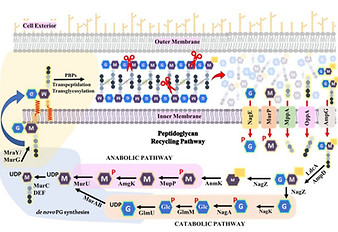
Cell wall is a result of equilibrium between synthesis and degradation and both must work in harmony to maintain cellular morphology and allow proper division. This fine-tuned balance is controlled by a variety of enzymes, including lytic transglycosylases (LTs). LTs specialize in breaking the glycosidic bond between N-acetylmuramic acid (NAM) and N-acetylglucosamine (NAG) in the peptidoglycan, releasing anhydromuropeptides that can either be recycled for new cell wall synthesis or, in some organisms, contribute to virulence
We are currently studying the function of Lytic transglycosylases (LTs) in Caulobacter crescentus, a non-pathogenic, Gram-negative bacterium that is inherently resistant to β-lactam antibiotics. Its dimorphic lifestyle, ease of cell cycle synchronization, and genetic tractability make it an ideal system to study the bacterial cell division. Using genetic tools and microscopy, we explore how LTs shape the cell wall during division and how their disruption affects cell morphology and antibiotic resistance.

Nucleoid associated proteins
(Parul Pal, Shakkhar Saha)
NAPs are low molecular weight DNA binding proteins present in bacteria. They play an essential role in maintaining the dynamic structure of the nucleoid and facilitate genome compaction. Beyond structural roles, NAPs influence critical DNA processes such as replication, transcription, and recombination by modulating DNA topology. In doing so, they regulate the expression of many genes and contribute to how bacteria adapt and respond to their environment. Our research focuses on the functional characterization of NAPs—we aim to understand how these proteins impact bacterial physiology and whether they play regulatory roles in growth and stress response.

Bacterial biofilms
(Rashmi Niranjan , Jasvinder Kaur)
Biofilms are the most predominant forms of bacterial life in nature- sticky, surface-bound communities that are notoriously hard to get rid of. Their extreme resistance to antibiotics makes them a major threat in chronic infections and hospital settings. A greater understanding of biofilm processes should lead to novel, effective strategies for biofilm control.. We are trying to understand cellular pathways involved in biofilm formation. Our group is currently studying monospecies biofilm models of Staphylococcus and E. coli to dive deep into the molecular mechanics of these resilient structures
-
Correlation between amidases and biofilm formation
-
Microbial metabolites and antibiofilm agents.

Microbial Diversity and Beneficial Microbes
(Deepika Chauhan , Deepa Sethi , Aditi Sharma)
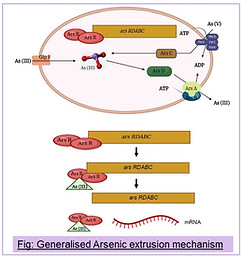
Microorganisms play a crucial role in environmental sustainability, offering innovative solutions such as bioremediation. Out of 51 strains isolated from Dadri wetland, Deinococcus indicus and Exiguobacterium are being actively studied in the lab for their remarkable potential in bioremediation.We are currently interested in harnessing microbial potential for arsenic resistance and polystyrene degradation which paves the way for sustainable environmental solutions. Our focus is understanding how these bacteria resist arsenic toxicity and break down persistent pollutants. These insights not only help in pollution mitigation but also showcase the broader role of microbes in maintaining ecological balance.